Taking Care of Your Body
It is important to take care of your body. Regular checkups and screening for STIs and cancers that affect breasts and genitals can make a big difference in your health. Most illnesses and infections can be treated or even cured if you find it early and get treatment.
Taking Care of Your Breasts

Taking Care of Your Vulva, Vagina & Cervix
Nearly all cases of cervical cancer are caused by the Human Papillomavirus (HPV), passed from one person to another during sex. HPV can cause changes in the cervical cells which can develop into cervical cancer if left untreated. The HPV Vaccine prevents nine types of the virus types which cause genital warts or cancers of the mouth, nose, throat, anus, penis, cervix and/or vagina. A Pap Test (Papanicolaou test) is a simple screening done by your health care provider to test for changes in cervical cells. A speculum is gently inserted into the vagina so cells can be taken from the cervix and examined under a microscope at a laboratory. Every person with a cervix should have a Pap test done every two years. Once you have had three normal results in a row, your health care provider may test every three years until you are 69 years old. Your first Pap test should be done when you are 21 years old or three years after becoming sexually active, whichever happens first.
Taking Care of Your Penis and Testes

If you have testicles, you should check them for changes monthly. One at a time, hold the testicle between your thumbs and fingers and roll it gently.
Book an appointment with your family doctor if you notice:
hard lumps
changes in size, shape or hardness in your testicles
unusual discharge from your penis
sores on your penis
burning pain when you pee
Even if you have no symptoms and your monthly self exams are normal, it is still important to see your family doctor for a check-up of your penis and testicles, and STI testing once per year.
Taking Care of Anus & Throat
Every sexual activity carries some risk of getting an STI, but most often STIs are passed though unprotected sex. When you have regular STI screening, it’s important that your health care provider swabs all the parts you’re using when you have sex. If you have had anal sex or oral sex, swabs of your anus and/or mouth should be done to test for STIs.
If you have any sores or pain on your anus or in your mouth, you should make an appointment with your family doctor.
Pelvic Floor Disorders
Urinary incontinence (leaking urine) and vaginal prolapse are very common conditions. These pelvic floor disorders are not life-threatening, but they may affect your quality of life. Talk with your healthcare provider about your symptoms and ask about treatment options or a referral to the Saskatchewan Pelvic Floor Pathway.
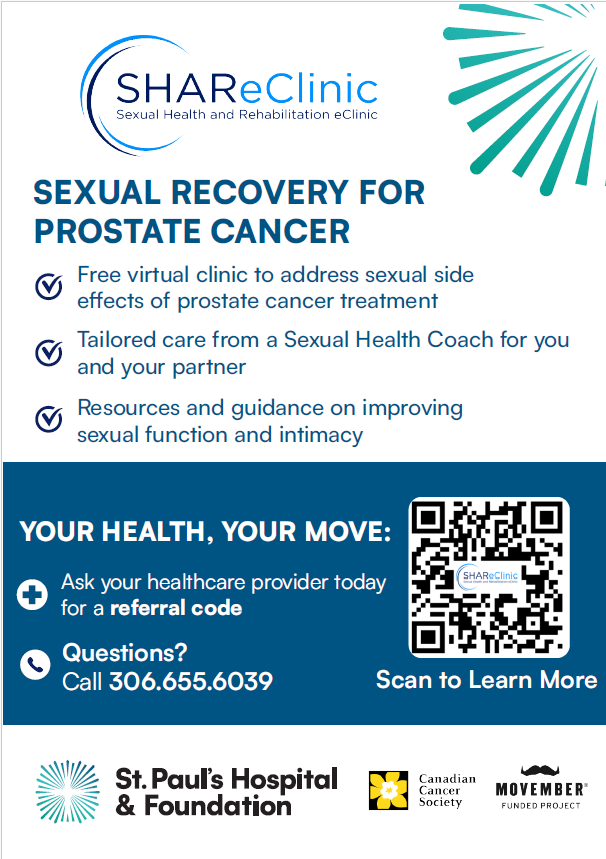
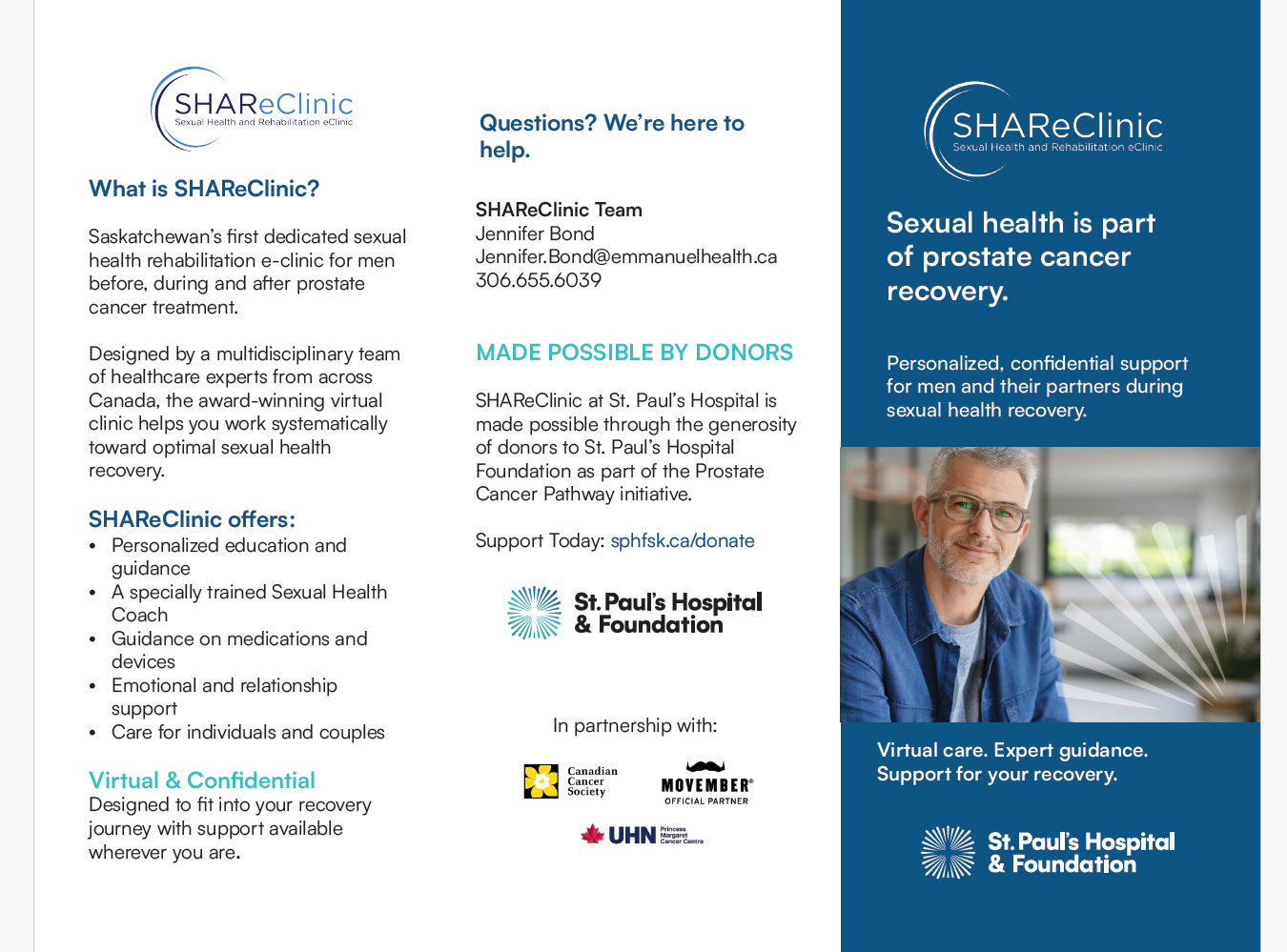
Prostate Cancer - SHAReClinic (Sexual Health & Rehabilitation e-clinic)
The SHAReClinic (Sexual Health and Rehabilitation e-Clinic), is a new program at St. Paul’s Hospital focused on supporting individuals and couples experiencing sexual health challenges related to prostate cancer treatment. SHAReClinic is a virtual, evidence-based program that provides personalized education, coaching, and support to address physical, emotional, and relational aspects of sexual health recovery. It is part of the Prostate Cancer Pathway initiative and is supported through the St. Paul’s Hospital Foundation, in partnership with True North and the Movember Foundation.